4-Ingredient No Knead Bread
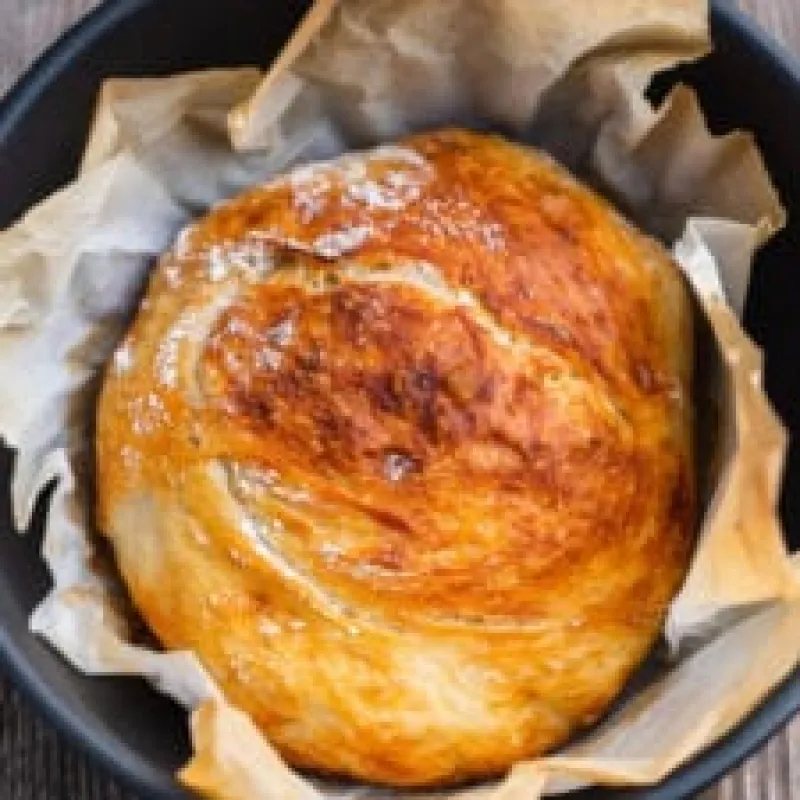
There's nothing better than fresh baked bread, especially when it requires just 4-ingredients, no kneading and no starter. Learn how to make this easy artisan bread at home in no time!
Ingredients
Instructions
In a large bowl combine the flour, yeast and salt until uniform. Form a well in the middle and add in the water. Stir until well incorporated and a shaggy dough forms. Cover the bowl with plastic wrap or a clean damp kitchen towel and allow it to rest for 12-18 hours at warm room temperature, or about 70 degrees. You’ll know it’s ready when it has expanded and has bubbles all over the surface.
Generously flour a work surface and pour the dough out onto it. Sprinkle the top of the dough with flour and fold it into itself 2-3 times using a bench scraper or clean hands. Cover loosely with plastic wrap and let rest about 15 minutes.
Lightly grease the inside of a large bowl. Using a small amount of flour (enough to keep dough from sticking to work surface or to your hands), shape dough into a ball. Place the bread into the greased bowl and cover with a damp towel. Allow it to rise in a warm area for about 2 hours. A great place to do this is in an oven with the light on.
30 minutes before the 2 hour mark, remove the dough from your oven if it is in there and preheat your oven to 450F. Place a 6 quart dutch oven (or heavy covered pot) inside. Allow it to warmup in the oven for at least 30 minutes. If you do not have a dutch oven, refer to the notes for tips on how to make this without one.
Want to see how it turns out?
We've hidden the final 3 steps to support the original creator. Get the full, complete instructions directly from their site!
Continue Reading at Sweetsimplevegan →Chef's Notes
This recipe was inspired by Jim Lahey.
If you want enhance the flavor of your no-knead bread, you can add ingredients such as olives, garlic, and fresh herbs (we like rosemary) while mixing your dough in step one.
It is possible to make this bread without a dutch oven, although that method is preferred. You can take a look at this blog post for all of the details, but here are our recommendations:
You can use a cast iron skillet (10″) or a baking stone for this bread. Add them into the oven to heat for 30 minutes just as you did with the dutch oven (step 4) as well as an additional cast iron skillet OR a baking sheet on the bottom rack. Bring water to a boil in a kettle (or a pot, but a kettle is preferred for easy pouring) and have it ready before you add in the dough. Once the dough has risen, spritz the dough with water and carefully place it into the cast iron skillet or on the baking stone. Working quickly (but carefully) add the boiling water to the cast iron skillet/baking sheet on the bottom rack. Wearing gloves here is recommended to prevent steam burns. If you can, we also suggest you spray the sides of the oven for additional steam. Close the oven and bake for 30-40 minutes, or until golden brown.
We have also made this with 2 baking sheets with success. At step 3, you can either set the dough to rise on a lined baking sheet with a damp cloth on top of it OR in a bowl with a damp cloth like the recipe calls for. The bowl will help the bread keep its shape better as it will spread out a bit on the pan, but either work! Rise the dough just the same as the recipe above, for 2 hours with a damp cloth on top of it. Preheat the oven to 450F about 30 minutes before the 2 hour mark with a baking sheet on the bottom rack. Bring water to a boil in a kettle (or a pot, but a kettle is preferred for easy pouring) and have it ready before you add in the dough. Once the dough has risen, remove the cloth, spritz the dough with water and carefully place the baking sheet with the oven. Working quickly (but carefully) add the boiling water to the baking sheet on the bottom rack. Wearing gloves here is recommended to prevent steam burns. If you can, we also suggest you spray the sides of the oven for additional steam. Close the oven and bake for 30-40 minutes, or until golden brown. so that it is ready to go when the dough has proofed.
A deep oven proof skillet may work in place of the dutch oven, just be sure it is safe at high temperatures. If it has an oven safe lid without a hole, you should be able to use it like you would a dutch oven, otherwise you can either place a baking sheet on top of it to trap in steam and act like a lid OR just follow the steps in the above in the first two suggestions with the cast iron skillet/baking sheet. Be sure to remove the lid or baking sheet dafter 30 minutes of baking just like you would a Dutch oven lid.
We have heard that can also use two cake pans to create a sort of dutch oven as well, placing the bread in one and then stacking the other one, upside down, on top of it to trap in steam.
Keep in mind that the baking sheet on the bottom rack may likely warp, so we suggest using a dedicated one/one you don’t mine messing up.
This recipe was inspired by Jim Lahey.
If you want enhance the flavor of your no-knead bread, you can add ingredients such as olives, garlic, and fresh herbs (we like rosemary) while mixing your dough in step one.
It is possible to make this bread without a dutch oven, although that method is preferred. You can take a look at this blog post for all of the details, but here are our recommendations:
You can use a cast iron skillet (10″) or a baking stone for this bread. Add them into the oven to heat for 30 minutes just as you did with the dutch oven (step 4) as well as an additional cast iron skillet OR a baking sheet on the bottom rack. Bring water to a boil in a kettle (or a pot, but a kettle is preferred for easy pouring) and have it ready before you add in the dough. Once the dough has risen, spritz the dough with water and carefully place it into the cast iron skillet or on the baking stone. Working quickly (but carefully) add the boiling water to the cast iron skillet/baking sheet on the bottom rack. Wearing gloves here is recommended to prevent steam burns. If you can, we also suggest you spray the sides of the oven for additional steam. Close the oven and bake for 30-40 minutes, or until golden brown.
We have also made this with 2 baking sheets with success. At step 3, you can either set the dough to rise on a lined baking sheet with a damp cloth on top of it OR in a bowl with a damp cloth like the recipe calls for. The bowl will help the bread keep its shape better as it will spread out a bit on the pan, but either work! Rise the dough just the same as the recipe above, for 2 hours with a damp cloth on top of it. Preheat the oven to 450F about 30 minutes before the 2 hour mark with a baking sheet on the bottom rack. Bring water to a boil in a kettle (or a pot, but a kettle is preferred for easy pouring) and have it ready before you add in the dough. Once the dough has risen, remove the cloth, spritz the dough with water and carefully place the baking sheet with the oven. Working quickly (but carefully) add the boiling water to the baking sheet on the bottom rack. Wearing gloves here is recommended to prevent steam burns. If you can, we also suggest you spray the sides of the oven for additional steam. Close the oven and bake for 30-40 minutes, or until golden brown. so that it is ready to go when the dough has proofed.
A deep oven proof skillet may work in place of the dutch oven, just be sure it is safe at high temperatures. If it has an oven safe lid without a hole, you should be able to use it like you would a dutch oven, otherwise you can either place a baking sheet on top of it to trap in steam and act like a lid OR just follow the steps in the above in the first two suggestions with the cast iron skillet/baking sheet. Be sure to remove the lid or baking sheet dafter 30 minutes of baking just like you would a Dutch oven lid.
We have heard that can also use two cake pans to create a sort of dutch oven as well, placing the bread in one and then stacking the other one, upside down, on top of it to trap in steam.
Keep in mind that the baking sheet on the bottom rack may likely warp, so we suggest using a dedicated one/one you don’t mine messing up.



Comments & Photos
Be the first to share your thoughts!
Reviews from the Original Source
This bread is amazing, and easy. Can be easily baked once a week instead of buying bread. Pretty much hands off and delicious! I made it this time with whole wheat flour and just added a little more water. It turned out really good.
This is going to be a problem!! It’s soooo good. And the recipe works every. single. time.
Made this and it was awesome... but the parchment paper stuck to the bottom of the bread! Should I flour the parchment paper next time?
I made this bread last week and it was wonderful! I don't even own a dutch oven so I used a stainless steel stockpot with aluminum foil on top. It was less than ideal but it worked and I plan to do it again! I have some rising right now but this time I am using organic bread flour instead of all-purpose!!! Really looking forward to eating it tomorrow!
omg guye I just tried this and it was soooo good. First time baking bread and I can't believe how easy it was
This bread was SO GOOD. I am going to start making this once a week instead of buying bread. If you don’t have a Dutch oven (like me) you can use a cast-iron skillet and put a tray of water underneath to create steam and then take the water out when you are supposed to remove the lid in the recipe.
Did you make this recipe?
Leave a Comment