Yudofu - Japanese Boiled Tofu Recipe
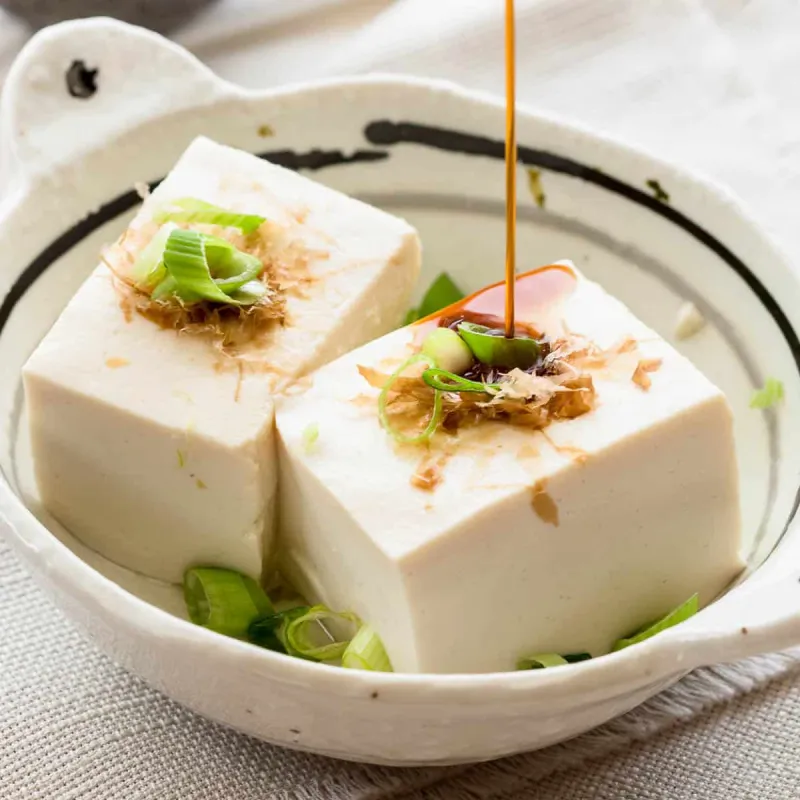
Yudofu is the easiest Japanese hot pot ever. In just 5 minutes, you’ll enjoy delicious boiled tofu that’s healthy, light and full of satisfying flavour. Perfect as a tasty side dish or snack.
Nutrition Facts
Ingredients
Instructions
Pour the water into a medium saucepan and add the kombu. Allow to soak for 15 minutes. No soaking required if using a nori sheet.
Place the saucepan over a low-medium heat, and once you see small bubbles start to form on the bottom of the pan (around 5-10 minutes), add the tofu pieces on top of the kombu. Simmer gently for 6-8 minutes. Avoid boiling or the tofu can crumble apart.
📹 Video Tutorial Available! Catch the full video on the original creator's site.
Want to see how it turns out?
We've hidden the final 3 steps to support the original creator. Get the full, complete instructions directly from their site!
Continue Reading at Wandercooks →Chef's Notes
Tofu – This recipe calls for soft or silken tofu, but should work fine with firm tofu as well, it will just have a different texture. Soft tofu can fall apart very easily, especially when removing from the plastic container. We recommend draining the liquid first before turning the tofu out into your palm. From here you can slice the tofu into smaller individual blocks while it’s resting on your palm. Please be extra careful with the knife so you don’t cut yourself. You can always place the tofu down on a chopping board to cut it if you’re unsure. Simmer the tofu carefully to help keep its shape intact.
Nori Sheet / Kombu Seaweed – Traditionally, the tofu is simmered in water with a slice of kombu seaweed (dried kelp) to add flavour. We place a sheet of nori underneath the tofu to stop it sticking to the pan as it simmers. While nori doesn’t add flavour, it does make it more convenient when taking the boiled tofu out of the pan. If you can’t find either of these nearby, you can buy them online.
Dashi Stock – To keep things simple we use dashi stock powder dissolved in hot water to flavour the sauce. It’s available in two main varieties – hon dashi (a more intense flavoured stock made with bonito flakes) or kombu dashi (seaweed only stock).
Tamari / Soy – Tamari is a Japanese soy sauce made without wheat, so it’s naturally gluten free. It has a purer, more balanced, less salty flavour than regular soy sauce, which means it’s also great for dipping your Japanese gyoza dumplings / potstickers.
Mirin – This is a sweet rice wine for cooking. If you can’t find it at your supermarket, you can omit or add in a 1/2 tsp of sugar instead. You can sometimes find this in regular supermarkets, otherwise head to your nearest Asian grocer or online.
Don’t Over-Boil – Avoid letting the tofu come to the boil or it can crumble apart.
Variations:
Sauces – Try the tofu with a drizzle of ponzu (citrus soy), goma dare (creamy sesame) or mentsuyu sauce.
Garnish Ideas – Some traditional tofu garnishes include spring onions / green onions, finely sliced gari (pickled ginger), ginger paste, shredded daikon, thin slices of nori, wasabi paste or matcha salt.
Add Spice – For extra flavour, serve with wasabi paste and shichimi togarashi (Japanese 7 spice mix)
Add Heat – Serve with finely chopped kimchi and a drizzle of sesame oil.
Cooling Summer Tofu – Instead of boiling the tofu, simply slice your fresh tofu into pieces. Garnish with spring onion, katsuoboshi (bonito flakes) and a drizzle of tamari or soy. This cold version is known as hiyayakko.
Make it Vegan / Vegetarian – Use vegetarian kombu dashi instead of regular dashi, and omit the katsuoboshi.
Add Vegetables – Simmer carrot or wakame in the hot water along with the tofu.




Comments & Photos
Be the first to share your thoughts!
Reviews from the Original Source
I was just trying to find recipe of Sanwin Makin (Semorina Cake) and eventually reached out your site.
Since I am Japanese/ Burmese, brought up in Yangon many years ago.
Sanwin Makin is the taste of home for me and enjoyed your article with smile (Now Yangon has changed dramatically in these days but what you experienced is of almost my memory !).
This simple recipe also caught my attention and found slighly strange for me about using Yakinori.
Yaki(roasted) Nori(seaweed) is not used for soup of this dish because Yakinori is expected to eat with rice etc.-to enjoy its crispy texture but never be boiled. Instead we use a sheet of Konbu seaweed to make tasty stock as you mentioned.
For the garnish, Ginger paste/ Yakinori cut into strings would be nice option. Korean pickle (Kimchi-cut into small pieces) dizzled with small amount of sesame oil is one of my favourates.
The dish is made during winter but not in summer.
In summer we have a cold version, just take out from plastic container and cut into pieces then garnish with what you like and dizzled with tamari source.
Did you make this recipe?
Leave a Comment